The Silent Saboteur: How Venue Acoustics Can Make or Break Your Next Industry Event
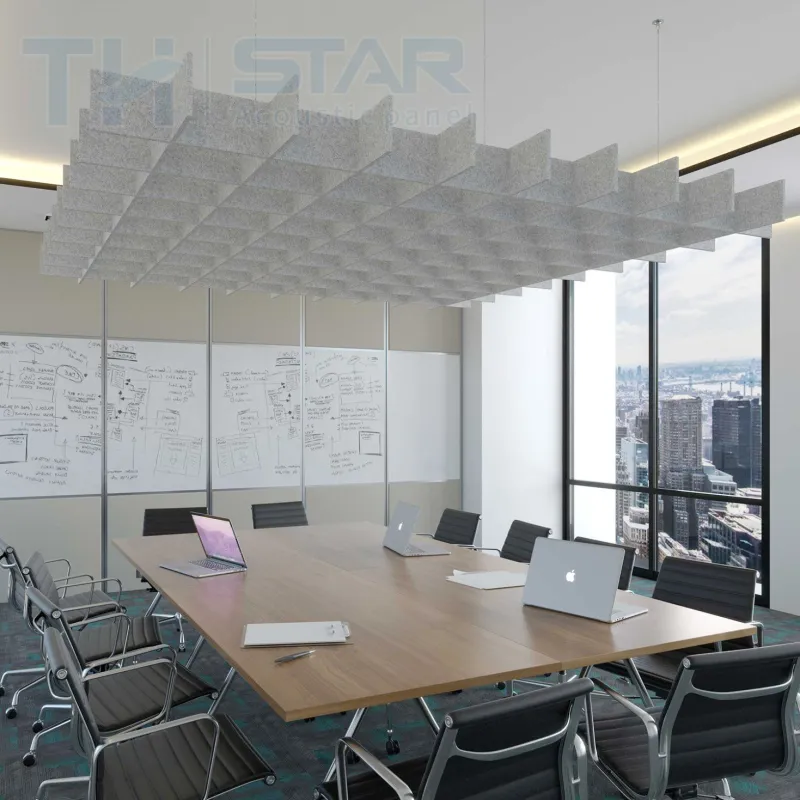
Photo: conference hall acoustic ceiling panels sound design event venue, via image.made-in-china.com
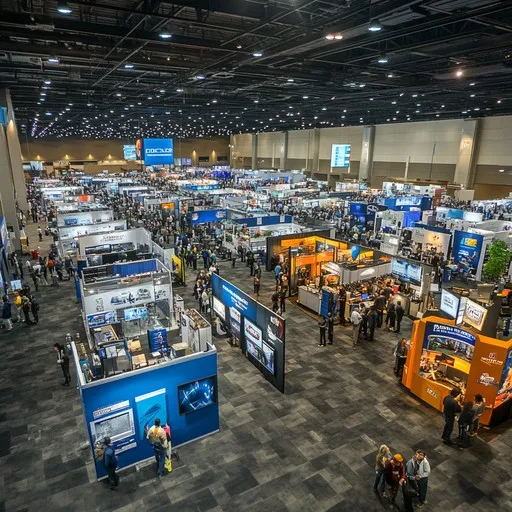
Walk into any trade show or conference and you will immediately notice the lighting, the signage, the carefully arranged booths. What you may not consciously register — but what your brain processes relentlessly — is the sound environment surrounding you. Venue acoustics represent one of the most underestimated variables in event planning, and the consequences of ignoring them extend far beyond a muffled keynote address.
At Angelina Expo Center, where ideas meet and industries connect, the physical environment is treated as an active participant in every event. Sound is no exception. The relationship between acoustic quality and attendee outcomes is well-documented, yet it remains one of the last considerations on most planners' checklists.
What Poor Acoustics Actually Cost You
The financial and experiential costs of a poorly designed acoustic environment are surprisingly concrete. Research published by the Acoustical Society of America has consistently demonstrated that excessive background noise — particularly in the range of 65 to 75 decibels, which is common on busy trade show floors — reduces speech intelligibility by as much as 40 percent. In practical terms, that means nearly half of what a presenter, exhibitor, or fellow attendee says is either missed or misunderstood.
For exhibitors, this translates directly into lost leads. A sales conversation interrupted by reverberant noise requires significantly more repetition, erodes the confidence of the pitch, and shortens the patience of a prospective client. Studies examining booth engagement at large-scale conventions have found that attendees spend an average of 23 percent less time at booths in high-noise zones compared to quieter areas of the same floor.
For conference sessions, the stakes are equally high. When attendees strain to hear a speaker, cognitive load increases substantially. The mental effort required to decode speech in a noisy environment leaves fewer cognitive resources available for comprehension and retention. Participants often report feeling fatigued after sessions held in reverberant spaces — not because the content was unengaging, but because the acoustic environment demanded so much of their processing capacity.
The Science Behind Sound Architecture
Acoustic performance in event spaces is governed by several measurable factors, each of which interacts with the others in complex ways.
Reverberation Time (RT60) refers to how long it takes for a sound to decay by 60 decibels after the source stops. In a large, hard-surfaced hall, RT60 values can exceed three seconds, creating the characteristic echo that makes speech difficult to follow. Optimal RT60 for speech-heavy events generally falls between 0.6 and 1.0 seconds.
Background Noise Level is measured in decibels and accounts for HVAC systems, foot traffic, adjacent spaces, and ambient crowd noise. The American National Standards Institute recommends background noise levels below 35 dB for classrooms and conference spaces — a benchmark that many convention centers struggle to meet on active event days.
Sound Transmission Class (STC) measures how effectively a wall or partition blocks sound from adjacent rooms or hallways. In multi-session conference settings, low STC ratings mean that a compelling breakout discussion in Room A becomes unwanted interference in Room B.
Venues that invest in acoustic treatment — through strategic placement of sound-absorbing panels, carpeted flooring, fabric-wrapped ceiling baffles, and carefully engineered HVAC systems — demonstrate measurably better attendee outcomes across all of these metrics.
Real-World Impact: When Sound Architecture Gets It Right
The transformation that thoughtful acoustic design produces is not merely theoretical. Convention centers that have undertaken acoustic renovation projects have reported significant changes in attendee satisfaction scores. In several documented cases, venues that added sound-dampening ceiling treatments and replaced hard flooring with carpeted sections in networking areas saw attendee-reported satisfaction with "ease of conversation" increase by more than 30 percent in post-event surveys.
For trade shows specifically, the positioning of exhibitors within a space carries acoustic implications that are often overlooked during floor planning. Placing high-traffic, high-noise exhibitors — such as those running live product demonstrations or audio-visual presentations — near the perimeter of the hall rather than the center reduces the acoustic interference experienced by the majority of the floor. This is a planning detail that experienced venue coordinators factor into every layout conversation.
Speaker amplification systems also play a pivotal role. A distributed speaker array, which places multiple lower-volume speakers throughout a room, consistently outperforms a single high-volume source in both intelligibility and listener comfort. The difference in attendee experience between these two approaches is substantial, particularly in spaces with irregular geometry or high ceilings.
A Practical Checklist for Evaluating Acoustic Quality
When assessing a venue for your next trade show, conference, or exhibition, consider incorporating the following acoustic evaluation criteria into your site visit process.
During the site visit:
- Clap once sharply in the center of the main hall and listen for echo or prolonged reverberation. A well-treated space will produce a short, clean decay.
- Request the venue's RT60 measurements for each primary event space. Reputable facilities will have this data available.
- Ask about the HVAC noise floor. Stand quietly in the space and listen for intrusive mechanical hum.
- Test the perimeter and corner areas, which often accumulate more reverberant energy than central positions.
- Evaluate wall and partition construction between breakout rooms by having a colleague speak at normal volume in an adjacent space while you listen from the other side.
In documentation and contracts:
- Request specifications for the installed sound reinforcement system, including speaker placement diagrams.
- Confirm whether the venue provides an on-site audio engineer or technician during events.
- Inquire about temporary acoustic treatment options, such as pipe-and-drape configurations or portable baffles, that can be deployed for specific sessions.
- Review past attendee feedback specifically referencing sound quality, which is often included in post-event reports provided by venue management.
Elevating the Attendee Experience Through Sound
The venues that earn repeat bookings and lasting reputations in the event industry are those that recognize every sensory dimension of the attendee experience as consequential. Lighting and layout will always command attention in the planning process, and rightly so. But the acoustic environment operates on a deeper, often subconscious level — shaping how well attendees listen, how freely they converse, and ultimately, how much value they derive from the time they invest in attending.
For event planners, exhibitors, and conference organizers, treating acoustics as a strategic variable rather than a background detail is one of the highest-leverage adjustments available. It costs relatively little to evaluate and, when a venue falls short, to address through targeted treatment options. The return, measured in attendee engagement, knowledge retention, and the quality of connections formed on the floor, is anything but silent.