Small Market, Stronger Signal: Rethinking Convention Venue Location as a Strategic Growth Tool
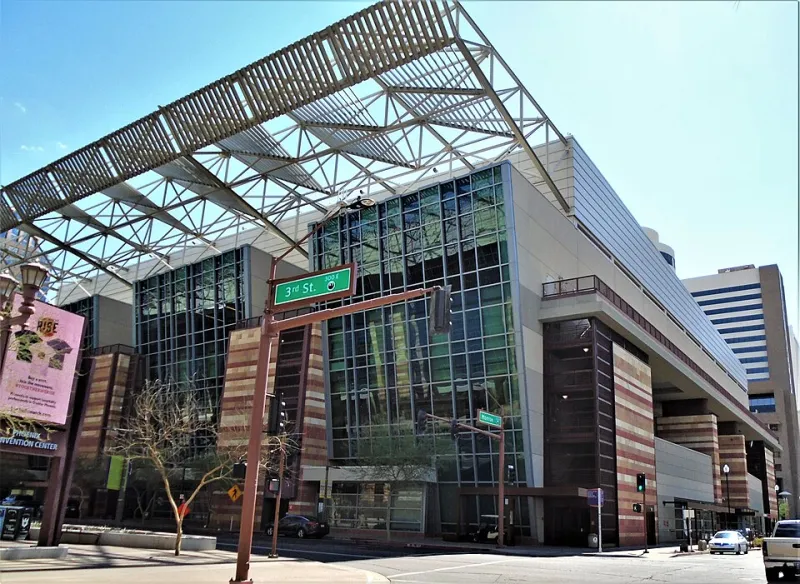
Photo: Beyond My Ken, CC BY-SA 4.0, via Wikimedia Commons
For decades, the conventional wisdom in event planning has followed a familiar script: secure the largest metropolitan venue your budget allows, leverage the city's brand recognition, and trust that proximity to a major urban center will translate into maximum attendance and business opportunity. It is a logic that feels self-evident — until you examine what is actually happening on the convention floor.
The data tells a more complicated story. Across a growing body of post-event analyses, regional convention centers situated in secondary and tertiary markets are consistently producing attendee pools that are more focused, more decision-ready, and more engaged than their counterparts at high-profile urban venues. Understanding why this happens — and how to use it strategically — may represent one of the most underutilized advantages in professional event planning today.
The Prestige Trap and What It Actually Costs You
When an event is hosted in a city like Chicago, Las Vegas, or New York, the location itself becomes part of the draw. That is precisely the problem. A significant portion of registered attendees at major metropolitan conventions are there for reasons that have little to do with the industry being represented. Tourism, personal travel objectives, and the allure of the destination city all contribute to registration numbers that look impressive in pre-event reporting but dilute the quality of floor interactions.
Event planners operating under attendance-volume metrics rarely account for what might be called attendee intent density — the proportion of registered participants who arrive with a clearly defined professional objective. In secondary markets, where the venue itself is not a tourist destination, the population self-selects with far greater precision. The professionals who travel to a regional convention center in a mid-sized market are, almost by definition, there for the industry. That signal clarity changes everything about how business gets done on the floor.
Why Regional Venues Produce Concentrated Networking Ecosystems
There is a sociological dimension to this phenomenon that event strategists rarely discuss openly. When attendees share accommodations within a compact geographic radius — as is typical in smaller markets where lodging options cluster near the venue — informal networking extends well beyond scheduled programming. Dinner conversations, hotel lobby exchanges, and shared shuttle rides become extensions of the convention floor in ways that simply do not occur when attendees disperse across a sprawling metropolitan area.
This concentration effect compounds over the course of a multi-day event. By the second morning, a regional convention has effectively become a contained professional ecosystem. Relationships that would require three separate scheduled meetings to develop at a large urban event often reach the same depth through organic proximity in a regional setting. For industries where trust-based relationships drive purchasing decisions — manufacturing, agriculture, healthcare supply chains, and specialized technology sectors among them — this compression of the relationship-building timeline carries measurable commercial value.
Evaluating Location Against Industry-Specific Outcomes
The critical mistake most event planners make is applying a universal location rubric to what is inherently an industry-specific decision. A venue selection framework that works brilliantly for a consumer electronics showcase may actively undermine the goals of a regional agricultural trade conference. The questions planners should be asking are not "How large is this city?" but rather: Where does the core of our industry actually live and operate? What travel distance represents a realistic commitment for our target attendee? And does the surrounding environment reinforce or distract from our industry's professional culture?
For industries with strong regional roots — energy, timber, agribusiness, manufacturing, and related sectors — the geographic alignment between venue location and industry concentration is often a more powerful attendance driver than metropolitan accessibility. Professionals in these fields frequently express stronger identification with regional venues precisely because those locations reflect the operational realities of their industries. A convention center embedded in a community that understands and participates in your industry creates an ambient credibility that no amount of urban prestige can replicate.
A Framework for Measuring Location Quality Beyond Zip Code
Practical venue evaluation requires moving past surface-level geographic metrics. The following criteria offer a more rigorous foundation for location assessment:
Attendee origin mapping. Before selecting a venue, analyze where your previous attendees actually traveled from. If the majority originate within a 300-mile radius of a secondary market, that market may offer superior logistical alignment compared to a distant metropolitan alternative.
Hotel-to-venue proximity ratios. Measure the average distance between available lodging and the convention floor. Tighter ratios consistently correlate with higher informal networking activity and stronger attendee satisfaction scores.
Local industry presence. Evaluate whether the host community has meaningful economic ties to your industry. Local business participation, municipal support, and community familiarity with your sector all contribute to an event environment that feels purposeful rather than transplanted.
Competitive noise levels. Major metropolitan markets host dozens of competing events simultaneously. Secondary markets typically offer a cleaner calendar, meaning your event captures a larger share of professional attention without competing for the same attendee pool.
Reconsidering What Growth Actually Looks Like
Perhaps the most important reframe for event planners is recognizing that industry growth is not synonymous with event scale. An industry conference that generates 400 high-intent attendees, produces 200 meaningful business introductions, and results in 60 documented post-event partnerships has delivered more measurable industry growth than a 4,000-person metropolitan showcase where the majority of attendees leave without a single qualified lead.
At Angelina Expo Center, this philosophy informs how we think about our role in the broader event ecosystem. Positioned to serve industries that value focused engagement over geographic spectacle, we have observed firsthand how a purposefully selected regional venue transforms the quality of professional exchange. The industries that have grown most consistently through our programming are not those that chased the largest possible audience — they are those that prioritized the right audience, in the right environment, with the right conditions for meaningful connection.
The paradox of venue selection is not really a paradox at all. It is a clarity problem. When planners stop optimizing for the metrics that look good in a proposal and start optimizing for the outcomes that actually advance their industry, the logic of regional venue selection becomes not just defensible — it becomes obvious.