When Bigger Isn't Better: The Hidden Cost of Overcrowded Trade Show Floors
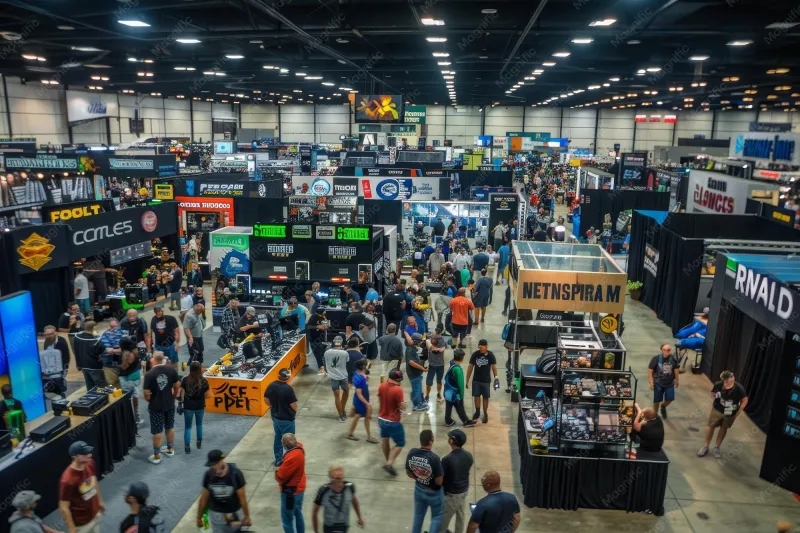
Photo: crowded trade show floor exhibitors networking convention center, via img.freepik.com
For years, the trade show industry has celebrated attendance records as the gold standard of event success. A packed convention floor, a standing-room-only keynote hall, and lines stretching past the registration desk have all been treated as proof that an event is thriving. Yet exhibitors who have spent years working these floors will often tell a different story—one where their highest-traffic shows produced the fewest qualified leads, and a mid-sized regional event led to their most valuable long-term partnerships.
This tension between raw attendance and genuine connection quality is not accidental. It is structural. And understanding why requires a serious look at how physical space, crowd behavior, and venue design interact to either enable or undermine meaningful professional exchange.
The Illusion of Opportunity
When an event draws twenty thousand attendees instead of ten thousand, the instinctive assumption is that exhibitors have twice as many opportunities. In practice, the relationship is rarely linear and is frequently inverse. As crowd density increases beyond a certain threshold, individual booth interactions become shorter, more transactional, and less substantive. Attendees in overstimulated environments shift into a mode of passive movement rather than active engagement. They scan rather than stop. They collect brochures rather than initiate conversations.
Behavioral researchers who study pedestrian flow in public spaces have long documented what they call the "density discomfort threshold"—the point at which crowding triggers avoidance behaviors rather than exploration. In convention settings, this threshold is reached faster than most organizers anticipate, particularly in exhibit halls where aisle widths, booth configurations, and traffic patterns were designed for a specific capacity range.
When that range is exceeded, the physical environment itself becomes an obstacle to the very connections the event was designed to facilitate.
Traffic Flow as a Strategic Variable
Venue operators and event planners often treat traffic flow as a logistical concern—something to manage for safety and comfort. But traffic flow is, in fact, one of the most powerful determinants of connection quality on a convention floor.
Consider how attendees navigate a dense exhibit hall. In well-designed environments, pathways create natural pause points: widened intersections, seating clusters near high-traffic zones, and strategically placed refreshment stations that slow movement without creating bottlenecks. These features give attendees permission to linger, which is the precondition for any meaningful conversation to begin.
In poorly optimized layouts, the opposite occurs. Narrow aisles create a current of foot traffic that is psychologically difficult to step out of. Attendees feel pressure to keep moving. Exhibitors find themselves pitching to people who are already mentally halfway to the next booth. The result is a floor full of activity that generates very little of lasting value.
The distinction matters enormously for exhibitors calculating return on investment. A company that pays a premium for floor space at a flagship national event may find that a well-structured regional show—with thoughtful spatial design and a curated attendee profile—delivers superior outcomes at a fraction of the cost.
Measuring What Actually Matters
The industry's reliance on headcount as a primary success metric has persisted largely because it is easy to measure and easy to market. Announcing that an event drew a record number of attendees is a compelling headline. Announcing that attendees reported above-average satisfaction with the quality of their interactions is a harder story to tell, even if it is the more meaningful one.
Venue operators who are serious about delivering genuine value to their exhibitors and attendees need to develop more sophisticated measurement frameworks. Several approaches are worth considering.
Dwell time analysis examines how long attendees spend in specific zones of the exhibit floor. Extended dwell time near exhibitor booths is a far stronger indicator of engagement quality than simple foot traffic counts. Modern venue management platforms can capture this data through badge scanning, Wi-Fi positioning, or RFID technology without requiring invasive monitoring.
Post-event connection surveys ask attendees to report on the number and perceived quality of new professional relationships formed during the event. When this data is collected consistently over multiple years, it becomes a powerful tool for correlating event design decisions with connection outcomes.
Exhibitor lead quality scoring moves beyond counting badge scans to evaluating the business potential of each interaction. Exhibitors who are asked to rate their leads—not just count them—provide organizers with actionable intelligence about which floor configurations, programming formats, and attendee demographics are producing the best results.
None of these metrics are technically difficult to implement. What they require is a philosophical commitment to measuring connection quality rather than simply celebrating connection quantity.
Designing for Depth
For venue operators looking to translate these insights into practical action, the principles are clearer than they might initially appear.
First, resist the temptation to maximize floor capacity. Every venue has an optimal density range—a sweet spot where the energy of a well-attended event is present without the cognitive overload that undermines genuine engagement. Identifying and respecting that range is one of the most important decisions an event organizer can make.
Second, invest in what might be called "decompression zones"—areas within the event footprint that are explicitly designed for slower, more deliberate interaction. Comfortable seating, lower noise levels, and proximity to coffee or light refreshments all encourage attendees to pause, reflect, and initiate the kinds of conversations that lead to lasting professional relationships.
Third, consider how programming can complement spatial design. Structured networking sessions, hosted buyer programs, and facilitated roundtables all create conditions for intentional connection that the open exhibit floor cannot reliably produce on its own. When these formats are integrated thoughtfully into the event schedule, they extend the depth of engagement without requiring additional floor space.
The Competitive Advantage of Connection Quality
As the trade show and convention industry continues to evolve in a post-pandemic landscape, the venues and event organizers that will distinguish themselves are not necessarily those that attract the largest crowds. They are the ones that have learned to think rigorously about what happens when people are in the room together—and to design environments that make those interactions as productive as possible.
Attendees and exhibitors are increasingly sophisticated in how they evaluate the events they choose to attend. They are asking harder questions about return on investment, time away from the office, and the tangible outcomes they can expect from participation. Venues that can answer those questions with data, design principles, and a genuine commitment to connection quality will earn the loyalty of the most valuable participants in their industries.
The goal, ultimately, is not to fill every square foot of available space. It is to ensure that every person who walks through the doors leaves with something worth carrying forward—a relationship, a partnership, or a conversation that changes the direction of their work. That outcome is not a function of attendance numbers. It is a function of intentional design.