Prestige vs. Performance: The Hidden Trade-Off Event Planners Make When Choosing a Convention Venue
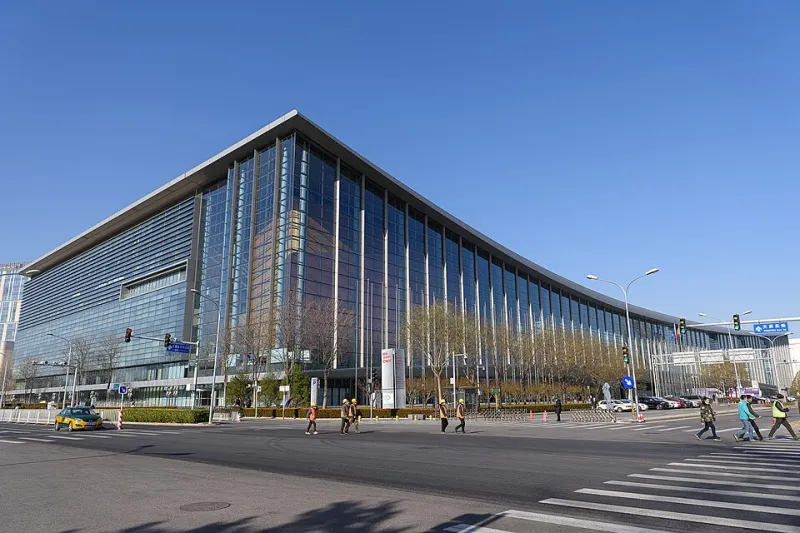
Photo: Dinkun Chen, CC BY-SA 4.0, via Wikimedia Commons
There is a persistent assumption embedded in the event planning industry: that a prestigious venue will produce a prestigious outcome. The logic seems sound on the surface. A landmark convention center in a major metropolitan area signals credibility. It attracts attention. It photographs well in promotional materials. What this reasoning overlooks, however, is the fundamental question that every exhibitor eventually asks—not "Was the venue impressive?" but rather, "Did the venue work?"
These are not the same question. And conflating them has cost exhibitors, organizers, and industries millions of dollars in missed opportunity.
The Criteria That Drive Most Venue Decisions
When event organizers evaluate convention spaces, the selection process typically centers on a familiar set of variables: total square footage, proximity to airports and hotels, catering quality, audiovisual infrastructure, and the venue's general reputation within the industry. These are legitimate considerations. None of them, however, directly measures the single metric that determines whether an exhibitor will return the following year—conversion rate.
Conversion, in the trade show context, encompasses everything from meaningful booth conversations to captured leads, closed deals, and post-event partnerships. It is the ratio of foot traffic to productive engagement. A venue can attract fifteen thousand attendees and still generate poor conversion numbers if its layout funnels the wrong visitors past the wrong booths, if its traffic flow creates bottlenecks that frustrate rather than facilitate discovery, or if the demographic profile of its typical attendee base does not align with an exhibitor's target customer.
Yet demographic alignment and traffic flow patterns rarely appear in a venue's standard marketing deck. Prestige does.
What Traffic Flow Actually Reveals
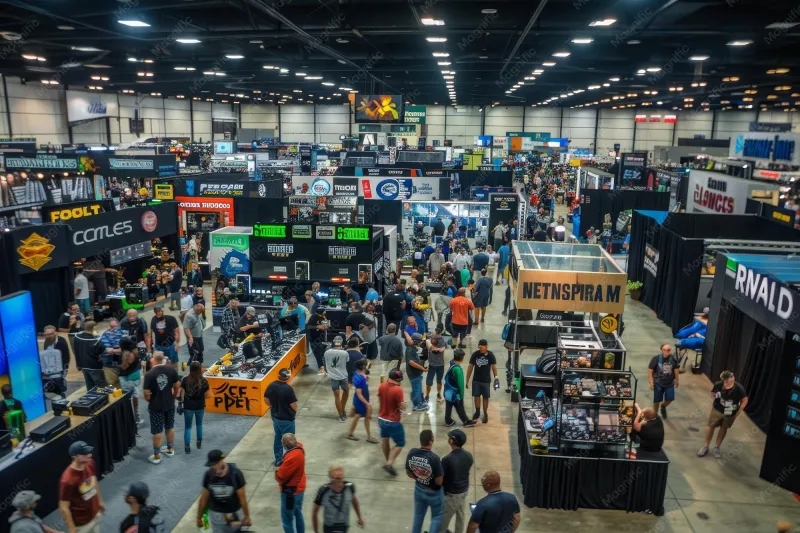
The physical architecture of an exhibition floor is not neutral. Every corridor width, entrance placement, and anchor booth position shapes attendee behavior in measurable ways. Research conducted across multiple trade show formats consistently demonstrates that attendees move through exhibition spaces in predictable patterns—favoring right-side pathways upon entry, clustering near food and beverage stations, and disengaging when floor plans feel labyrinthine or overwhelming.
A venue that fails to account for these behavioral tendencies effectively creates winners and losers among its exhibitors before a single badge is scanned. The booths positioned along high-traffic corridors near natural gathering points will outperform those tucked into peripheral sections, regardless of the exhibitor's product quality, staff preparation, or marketing investment. When planners select venues without scrutinizing floor plan data, they are essentially accepting this inequity as a fixed condition rather than a solvable design problem.
At Angelina Expo Center, traffic flow analysis is not an afterthought applied during post-event review. It is a foundational element of how exhibition space is configured and sold. Historical movement data informs booth placement recommendations, and floor plans are evaluated not merely for capacity but for their capacity to distribute attendee engagement equitably across exhibiting partners.
The Demographic Alignment Gap
Beyond physical layout, there is a subtler form of venue mismatch that receives almost no attention in planning conversations: the gap between a venue's established attendee base and an exhibitor's target market.
Every convention center with a meaningful operating history has accumulated demographic data across its events—industry sectors represented, professional seniority levels, geographic origins, and purchasing authority profiles. This data is extraordinarily valuable to exhibitors making booth investment decisions. An organization selling enterprise-level software solutions needs to know whether a venue's typical trade show attracts procurement decision-makers or junior technical staff. A regional distributor needs to know whether the attending audience is concentrated in its service territory or dispersed across markets it cannot practically serve.
When this demographic intelligence is unavailable or not proactively shared, exhibitors are making investment decisions in the dark. They are trusting that a venue's reputation as a "major" or "premier" event space translates into the right audience—an assumption that is frequently unwarranted and rarely verified until after the event has concluded and the invoice has been paid.
Historical Conversion Data: The Metric Nobody Publishes
Perhaps the most striking gap in standard venue evaluation practices is the near-total absence of historical conversion benchmarks from venue marketing materials. Venues routinely publish attendance figures, square footage statistics, and testimonials from satisfied organizers. What they do not typically publish is any data on exhibitor lead generation, post-show sales attribution, or year-over-year exhibitor retention rates.
Exhibitor retention, in particular, is an underutilized proxy for venue performance. When the same companies return to exhibit at a venue year after year, it signals that the experience delivered measurable value. When exhibitor rosters turn over significantly between editions of the same show, it suggests that the value proposition failed to meet expectations—regardless of how impressive the venue looked in the promotional photographs.
Asking a venue for its exhibitor return rate is a simple due diligence step that most planners never take. It is also one of the most revealing questions a planner can ask.
Rethinking What "Premium" Means
The event planning industry has inherited a definition of premium that was built around hospitality metrics—quality of food service, elegance of common areas, responsiveness of venue staff. These qualities matter to attendees and, by extension, to organizers. They do not, however, constitute the full measure of a venue's value to the exhibiting community.
A genuinely premium exhibition venue is one that demonstrably improves exhibitor outcomes. It provides transparent data on attendee demographics. It designs floor plans with traffic science rather than aesthetics as the primary driver. It tracks and shares conversion-adjacent metrics that allow exhibitors to evaluate their investment with the same rigor they would apply to any other marketing expenditure.
This is the standard that Angelina Expo Center holds itself to. The premise that ideas should meet and industries should connect is not merely a brand statement—it is a design and operational mandate. Connection requires proximity, yes, but it also requires alignment. The right people must encounter the right exhibitors under conditions that make productive engagement possible.
The Question Every Planner Should Ask First
Before signing a venue contract based on location prestige, square footage, or amenity packages, event planners owe their exhibiting partners a more rigorous evaluation process. The foundational question is not "Will this venue impress our attendees?" The foundational question is "Will this venue convert our attendees into outcomes our exhibitors can measure?"
A venue that answers this question with data—rather than with photographs of its grand atrium—is a venue that understands what the trade show industry actually needs. Prestige, as it turns out, is most valuable when it is earned on the floor.