Rhythm Over Runtime: How Strategic Event Pacing Transforms Attendee Engagement and Exhibitor Results

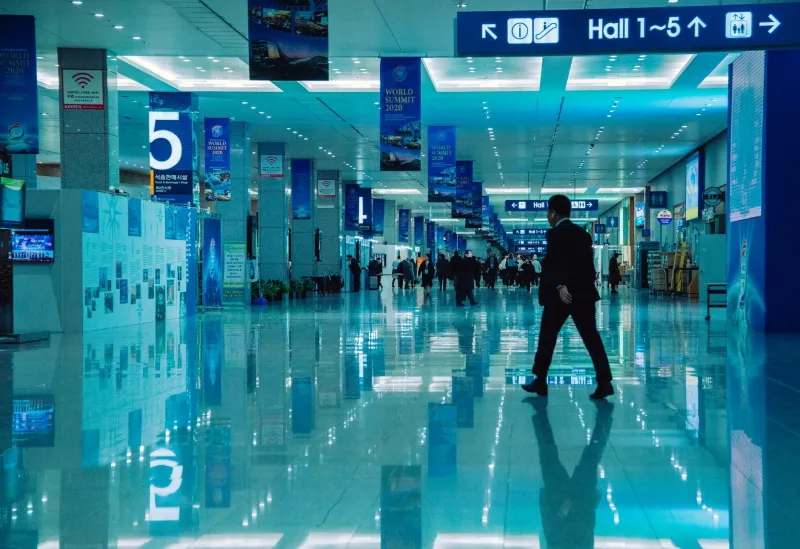
Photo: Atanu Bose Photography, CC BY-SA 4.0, via Wikimedia Commons
There is a reason certain concerts feel electric from the first note to the last, while others—even with technically superior musicians—leave audiences restless and checking their watches. The difference is rarely talent. It is sequencing. A skilled music director understands that the order, tempo, and breathing room between songs shapes how an audience experiences the entire performance.
The same principle applies, with remarkable precision, to trade shows, conferences, and industry exhibitions. At Angelina Expo Center, we have observed this dynamic across hundreds of events: the venues and organizers who treat scheduling as a strategic tool consistently outperform those who treat it as a logistical formality. Duration is not the variable that drives outcomes. Rhythm is.
The Cognitive Cost of a Poorly Sequenced Day
Attendees arrive at industry events carrying a finite reservoir of mental bandwidth. Behavioral economists refer to this phenomenon as decision fatigue—the measurable decline in cognitive quality that follows a sustained period of choices, conversations, and information intake. In an event context, this fatigue is not theoretical. It is the reason a promising conversation that begins at 3:45 p.m. rarely produces the same result as the same conversation at 10:15 a.m.
When event schedules are constructed without accounting for this reality, the consequences compound quickly. A dense morning of back-to-back keynotes followed by an immediate transition to the exhibit floor deposits attendees in front of exhibitors at precisely the moment their capacity for genuine engagement is most depleted. The exhibitor interprets low-energy responses as disinterest. The attendee moves on without retaining what was said. Both parties leave the interaction having technically connected but practically accomplished nothing.
The architecture of the day either protects cognitive bandwidth or erodes it. There is very little neutral ground.
What the Research on Event Flow Actually Shows
Studies in environmental psychology and meeting design have consistently identified several patterns worth noting for any event planner or venue operator serious about attendee performance.
First, the period between 90 and 120 minutes into any sustained activity represents a natural inflection point in attention and retention. Scheduling a transition—whether a break, a facilitated networking segment, or a change in format—at or before this threshold preserves engagement quality far more effectively than powering through to a longer session.
Second, the placement of unstructured social time matters as much as its total volume. Forty-five minutes of open networking immediately following a high-quality keynote consistently produces more substantive conversations than the same forty-five minutes scheduled as a standalone mid-morning break. The keynote serves as shared context, giving strangers an immediate and credible opening. The break without that context defaults to weather and travel logistics.
Third, energy levels follow a predictable arc across a full event day. The period from roughly 10:00 a.m. to 11:30 a.m. represents peak cognitive receptivity for most adult professionals. Early afternoon—particularly the window between 1:30 p.m. and 3:00 p.m.—corresponds with a well-documented post-lunch dip in alertness. Late afternoon, from approximately 3:30 p.m. onward, often sees a secondary recovery. Scheduling high-stakes sessions, major product announcements, or critical networking opportunities against these natural rhythms rather than in opposition to them is one of the most underleveraged advantages available to event organizers.
The Exhibitor Dimension: Why Pacing Affects the Booth, Not Just the Ballroom
Exhibitors frequently attribute inconsistent floor traffic to factors outside their control—booth location, competitor presence, broader market conditions. These factors are real, but they obscure a variable that is entirely within an event organizer's influence: when attendees arrive on the floor, and in what cognitive state.
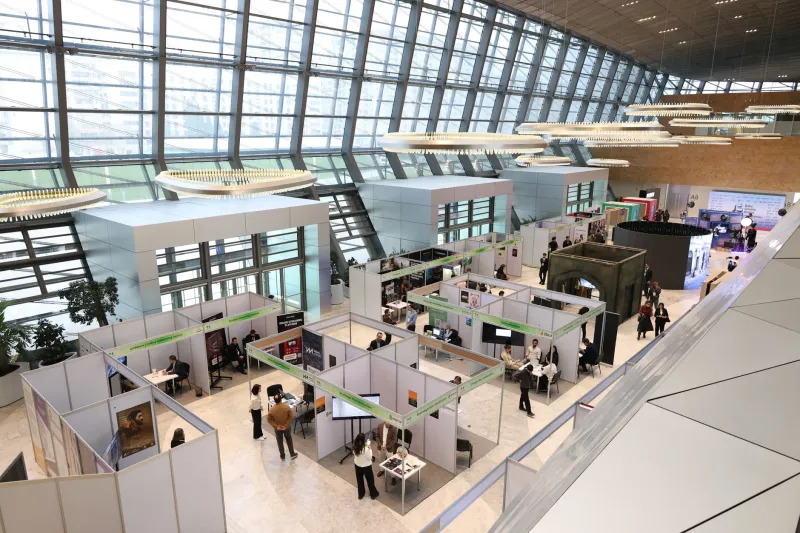
An exhibit hall that opens immediately after registration, before any programming has established shared context or warmed attendee engagement, will generate foot traffic that is physically present but mentally elsewhere. Attendees in this state tend to collect materials without processing them, accept demos without retaining them, and exchange contact information without intention behind it.
Contrast that with an exhibit floor that opens following a well-sequenced morning of programming—one that has surfaced relevant industry challenges, introduced shared vocabulary, and created genuine curiosity about solutions. Attendees entering that floor are primed. They are not browsing. They are looking. The exhibitor's job becomes substantially easier, and the quality of interactions rises accordingly.
This is why the most effective event schedules treat exhibit floor access not as a default state that runs parallel to programming, but as a deliberate phase of the day with its own optimal entry and exit points.
Designing a Schedule That Performs
For event organizers and venue teams looking to apply these principles practically, several frameworks have proven consistently effective.
Anchor and release sequencing. Structure the day around alternating periods of focused input—keynotes, panels, workshops—and deliberate release—networking, exhibition, informal conversation. Each anchor session should be followed by a release period long enough to allow genuine interaction, not merely physical transition.
Protect the mid-morning window. Reserve the 10:00 a.m. to 11:30 a.m. window for your highest-priority programming. This is when attendees are most receptive, most alert, and most likely to retain what they encounter. Using this window for logistical announcements or low-priority content is a significant missed opportunity.
Design breaks with purpose. A fifteen-minute break that provides seating, refreshments, and a clear conversation prompt—a question posted on a display, a topic tied to the preceding session—will produce more meaningful interactions than a thirty-minute break with no structural invitation to engage. The environment shapes the behavior.
Build in decompression before high-stakes moments. If your agenda includes a major announcement, a critical panel, or a featured networking dinner, the thirty to forty-five minutes immediately preceding that moment should be low-demand. Give attendees time to settle, reset, and arrive with attention available rather than depleted.
The Venue's Role in Enabling Rhythm
None of this happens without a venue infrastructure capable of supporting it. Flexible room configurations that allow rapid transitions between formats, catering operations that can deliver refreshments precisely when the schedule calls for them, and spatial design that naturally guides attendees from one phase of the day to the next are not amenities—they are operational prerequisites for executing a rhythm-based event strategy.
At Angelina Expo Center, where ideas meet and industries connect, our team works directly with event planners to map not just the logistics of a day but the experiential arc of it. The goal is always the same: to create conditions where the right conversations happen at the right moments, and where attendees and exhibitors alike leave having genuinely used their time rather than merely spent it.
The clock on the wall will tell you how long an event ran. The quality of what happened inside it will tell you whether the pacing was right.