Square Footage Is a Trap: What High-Performing Exhibitors Know About Booth Strategy That Most Don't
Every year, exhibitors arrive at trade shows convinced that the path to success runs through the real estate department. A larger booth, they reason, means more visibility. More visibility means more foot traffic. More foot traffic means more leads. It is a logical chain — and it is largely wrong.
The square footage myth has cost businesses significant budget allocations with disappointing returns. Meanwhile, a growing cohort of strategic exhibitors — many of them working with modest footprints — are consistently outperforming their larger-booth counterparts in qualified lead generation, post-show engagement, and overall return on investment. The difference is not how much space they occupy. It is what they do with the space they have.
Why the Bigger-Is-Better Assumption Persists
The appeal of a large booth is understandable. There is a certain psychological comfort in square footage — it signals investment, seriousness, and organizational scale. For companies exhibiting for the first time or entering a competitive vertical, the instinct to "show up big" is almost reflexive.
Venue sales teams and floor plan coordinators at major trade shows have long capitalized on this instinct. Premium placement packages, double-wide corner spots, and island configurations command higher prices precisely because exhibitors believe they translate directly into performance. Sometimes they do. More often, they simply translate into a higher line item on a post-event budget report.
The problem is that size, in isolation, is a passive variable. A large booth does not attract attendees — it merely provides space for them to enter if they choose to. Without a deliberate strategy governing how that space is arranged, activated, and experienced, square footage becomes overhead rather than advantage.
Traffic Flow Is the Variable Most Exhibitors Ignore
One of the clearest differentiators between high-performing and underperforming exhibitors is their relationship to traffic flow — not their own traffic, but the natural movement patterns of attendees across the entire show floor.
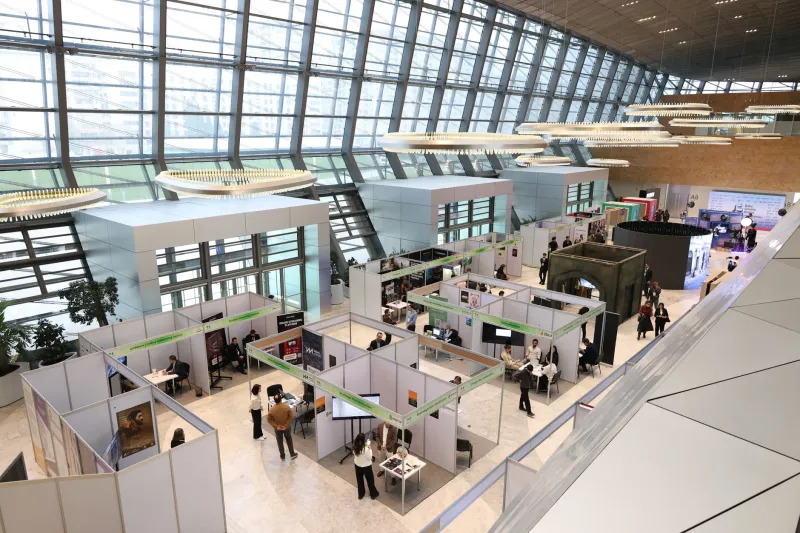
Every venue has a circulation logic. Attendees enter from certain points, gravitate toward anchor exhibits, cluster near food and beverage stations, and avoid dead-end aisles. Experienced exhibitors study these patterns before the show opens, often by reviewing floor plan layouts in advance or walking the space during setup. They position their most compelling engagement element — whether that is a live demonstration, an interactive display, or a conversation-starter product — at the natural intercept point between where attendees are walking from and where they are heading next.
This is micro-positioning, and it works regardless of booth size. A 10-by-10 exhibit placed at a natural corridor junction will outperform a 30-by-30 island placed in a low-traffic quadrant almost every time. Understanding the venue's spatial logic is not a luxury reserved for exhibitors with large budgets. It is a skill available to anyone willing to study the environment before committing to it.
Interactivity Converts Passersby Into Participants
The second major variable separating strategic exhibitors from square-footage maximizers is the presence of interactive elements — and the intentional design of the experience that surrounds them.
Static displays, printed banners, and product samples arranged on a table represent the lowest-engagement configuration an exhibitor can deploy. They communicate information, but they do not create participation. Participation is what generates memory, and memory is what generates follow-up.
High-performing exhibitors design their booths around a central interactive moment. This might be a product demonstration that requires attendee involvement, a brief assessment or quiz that delivers personalized results, a hands-on trial of a technology, or even a well-facilitated conversation structured around a specific business problem. The format matters less than the principle: attendees who do something at your booth are exponentially more likely to remember you than attendees who simply see something.
Smaller booths often execute this better than larger ones, precisely because constraint forces clarity. When you have 100 square feet, you cannot afford to fill it with decorative elements. You must identify the one or two experiences that will drive genuine engagement and build the entire space around them.
Positioning Within the Venue Architecture
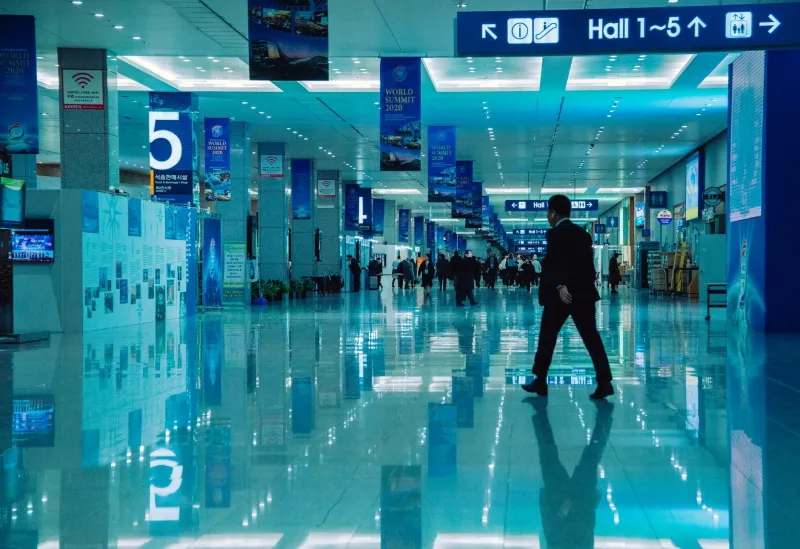
Beyond individual traffic patterns, the broader architecture of a convention center or expo hall exerts significant influence over exhibitor performance. Venues like Angelina Expo Center are designed with deliberate spatial logic — main hall entrances, registration areas, keynote overflow zones, and networking lounges all create gravitational pulls that shape attendee movement throughout the day.
Exhibitors who understand this architecture treat booth placement as a strategic decision rather than a logistical one. Being adjacent to a high-traffic anchor — a major sponsor's display, a featured product category, or a session overflow area — can deliver passive foot traffic that even the most compelling booth in a quiet corner cannot match.
This is worth negotiating for. Most exhibitors accept their assigned placement without question. Strategic exhibitors ask questions: Where do attendees spend the most time? Which aisles see consistent traffic throughout the day rather than only during peak hours? Is there a location near a scheduled activation or product launch that will draw concentrated attention?
Venue staff and event coordinators often have this information and are willing to share it with exhibitors who ask directly. The conversation itself is a form of competitive advantage.
Conversations Over Conversions: Rethinking What Success Looks Like
Perhaps the deepest strategic shift high-performing exhibitors have made is in how they define success on the show floor. Badge scans, business card volume, and raw lead counts are seductive metrics — they are easy to collect and easy to report. But they are poor predictors of post-show revenue.
The exhibitors consistently generating the strongest returns are those who have deliberately traded quantity for quality. Rather than optimizing for how many people enter their booth, they optimize for how many substantive conversations their team has with the right people. This often means training booth staff to qualify visitors early, to exit low-fit conversations graciously, and to invest full attention in prospects who represent genuine opportunity.
Smaller booths, counterintuitively, often facilitate this better. They create natural intimacy, reduce the ambient noise and distraction common in oversized configurations, and signal to attendees that the company values depth over spectacle.
The Strategic Exhibitor's Checklist
For exhibitors preparing for their next trade show, the practical implications of this research are straightforward:
- Study the floor plan before finalizing your placement. Identify high-traffic corridors, anchor exhibits, and session overflow zones. Request placement data from the venue or event organizer.
- Design around one central interactive moment. Identify the single experience that will generate participation and build your booth configuration to support it.
- Train your team on qualification, not just engagement. The goal is meaningful conversations with the right people, not maximum badge scans.
- Negotiate placement strategically. Proximity to high-traffic anchors often delivers more value than additional square footage.
- Evaluate success by pipeline quality, not lead volume. Thirty qualified conversations will outperform three hundred badge scans in almost every post-show revenue analysis.
The trade show floor has always rewarded preparation and strategy over budget and scale. In an environment where every dollar of marketing spend is under scrutiny, the exhibitors who internalize this principle will continue to outperform those still measuring success in square feet.