The Case for Empty Space: How Deliberate Breathing Room Transforms Convention Economics
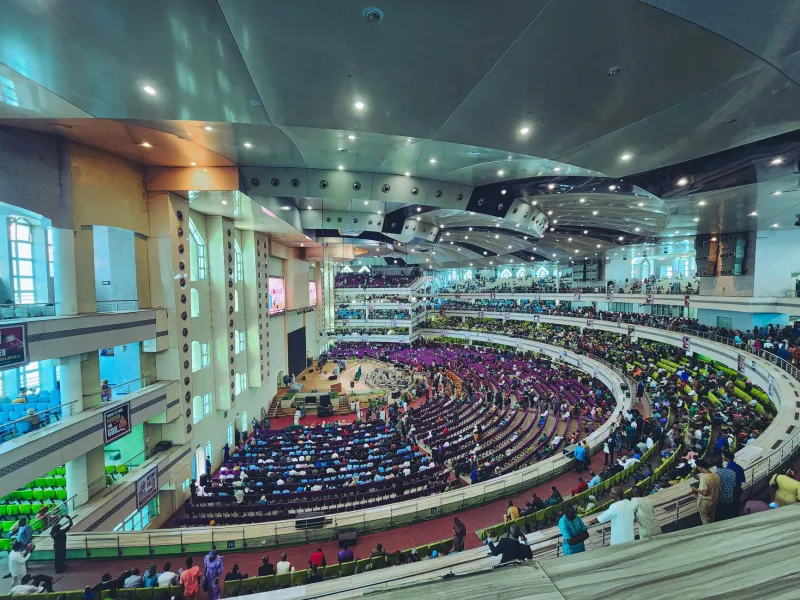
For decades, the prevailing logic in convention and trade show planning has been straightforward: fill every square foot, maximize booth count, and push attendance as high as the fire code allows. Revenue, under this framework, is simply a function of density. The more bodies on the floor and the more exhibitors packed into available space, the better the financial outcome.
That logic, while intuitive, is increasingly being challenged — and the results are difficult to ignore.
A new generation of event organizers is arriving at the same counterintuitive conclusion: that deliberately leaving space open, designing for comfort rather than capacity, and resisting the urge to monetize every available corner actually produces superior outcomes across nearly every meaningful metric. What looks like inefficiency on a floor plan spreadsheet is, in practice, a sophisticated competitive strategy.
The Hidden Cost of Maximum Density
Before exploring what intentional openness achieves, it is worth understanding what overcrowding quietly destroys.
When attendees feel physically compressed — navigating narrow aisles, competing for eye contact with exhibitors, struggling to hold a conversation above ambient crowd noise — their cognitive engagement diminishes rapidly. Research in environmental psychology consistently demonstrates that spatial crowding elevates stress hormones, shortens attention spans, and accelerates decision fatigue. For trade show attendees who arrive with purchasing authority or partnership objectives, these effects are not trivial. They translate directly into shorter dwell times at booths, lower-quality conversations, and a reduced likelihood of meaningful follow-up.
Exhibitors feel the consequences acutely, even when they cannot always articulate the cause. A booth that generates fifty brief, distracted interactions in a crowded hall may produce fewer qualified leads than twenty focused, unhurried conversations in a well-spaced environment. The numbers look better on the crowded floor. The results look better from the spacious one.
What Intentional Openness Actually Looks Like
Strategic underutilization is not simply a matter of booking fewer exhibitors or capping attendance registration. It is a deliberate design philosophy applied at every layer of the event experience.
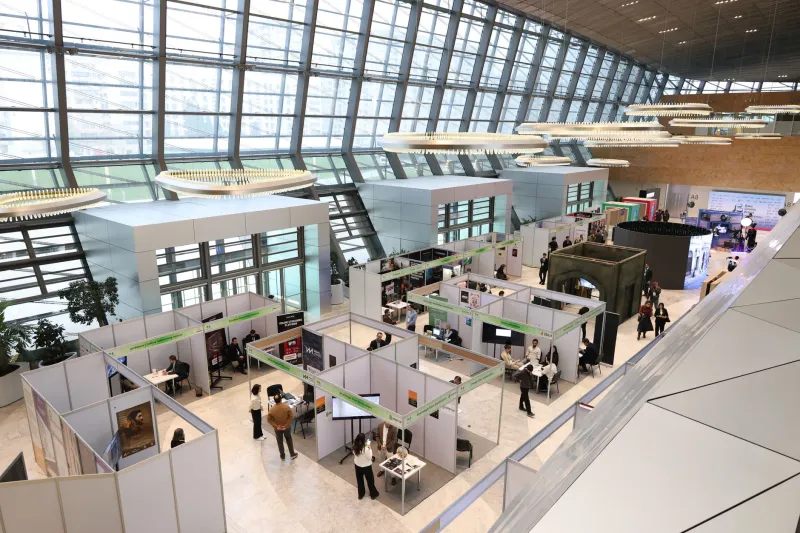
In the exhibit hall, it means widening primary aisles beyond the industry standard — sometimes significantly — to allow natural pedestrian flow rather than forced navigation. It means positioning anchor exhibitors with buffer zones that invite lingering rather than passing. It means resisting the temptation to fill corner spaces and end caps with additional vendors when those positions might serve better as informal gathering nodes.
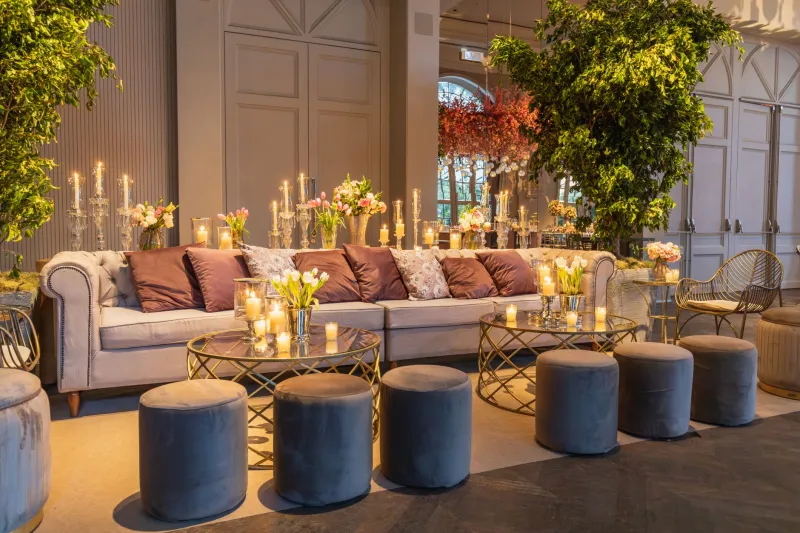
In breakout and session areas, intentional openness means configuring seating below maximum room capacity, ensuring that attendees can choose their proximity to others rather than having it dictated by a packed room. It means providing pre-function corridors and lobby spaces that feel generous rather than transitional — areas where unscheduled conversations can develop without the pressure of foot traffic flowing around them.
At the registration and entry level, it means staggering arrival windows, designing check-in infrastructure that eliminates queuing anxiety, and creating an immediate first impression of ease rather than congestion.
Each of these choices costs something in theoretical maximum revenue. Each of them returns something more valuable in actual attendee behavior.
The Exhibitor Perspective: Quality Over Quantity of Engagement
For exhibitors, the argument for spacious event design is largely a conversion rate argument.
Consider the typical exhibitor's economics. The investment in booth space, display materials, travel, staffing, and logistics is substantial regardless of the event's density. What varies is the quality of conversations that investment generates. In an overcrowded environment, booth staff spend significant energy managing visitor flow, repeating abbreviated pitches, and struggling to identify genuine prospects amid a tide of foot traffic. In a well-spaced environment, those same staff members can engage more deliberately, ask better qualifying questions, and build the kind of rapport that actually converts to post-show business.
Exhibitors who have experienced both environments frequently report that their cost-per-qualified-lead drops meaningfully at less crowded events — not because fewer people attend, but because the people who do attend are more present, more focused, and more willing to invest time in a substantive exchange.
This dynamic has significant implications for how venues and organizers should think about pricing and exhibitor retention. An event that delivers higher conversion rates for its exhibitors commands stronger loyalty and more competitive booth fees over time, even if the raw attendance numbers appear modest by comparison.
Rethinking the Metrics That Matter
The challenge for venue operators and event organizers is largely a metrics problem. The industry has historically measured success through figures that are easy to count: total attendance, booth count, square footage sold, and gross registration revenue. These numbers are visible, reportable, and satisfying to present to stakeholders.
The outcomes that intentional openness improves — attendee satisfaction, exhibitor lead quality, post-event net promoter scores, year-over-year rebooking rates — are harder to quantify in the moment but far more predictive of long-term event health. An organizer who optimizes aggressively for density may post strong numbers in year one while quietly eroding the attendee and exhibitor experience that drives renewal in years two and three.
Forward-thinking venues are beginning to build measurement frameworks that capture these longer-horizon indicators. Post-event surveys that specifically probe spatial comfort, conversation quality, and overall energy level are being integrated into standard reporting. Exhibitor retention rates are being tracked alongside booth revenue. Attendee return rates are being analyzed in relation to reported satisfaction with the physical event environment.
When these data points are placed alongside density metrics, the picture that emerges is consistently more favorable to the spacious event model than conventional assumptions would predict.
The Premium Positioning Advantage
There is a branding dimension to this conversation that deserves explicit attention.
Events that are known for their quality of experience — for the ease of navigation, the quality of conversation, the sense that the organizer genuinely prioritized attendee comfort — occupy a distinct and defensible market position. In an industry where trade shows and conferences compete vigorously for both attendee registration dollars and exhibitor investment, reputation for experience quality is a durable competitive advantage.
This premium positioning also supports pricing power. Attendees and exhibitors who associate an event with a superior experience are demonstrably less price-sensitive than those who view attendance as a commodity transaction. The organizer who has built a reputation for deliberate, high-quality event design can sustain registration and booth fees that a density-maximizing competitor cannot.
A Different Way to Fill a Room
The venues and organizers that are leading this shift are not abandoning the pursuit of revenue. They are pursuing it through a more sophisticated model — one that recognizes the experience of the event as the primary product, and physical space as one of the most powerful tools available to shape that experience.
At Angelina Expo Center, the principle that ideas meet and industries connect is not incidental to the physical environment we provide. It is expressed through it. Space that breathes, corridors that invite rather than direct, and rooms configured for conversation rather than compression — these are not amenities. They are infrastructure for the outcomes our clients and their attendees come here to achieve.
The most productive convention floor is rarely the fullest one. It is the one designed with enough intentional openness that the people inside it can actually do the work they came to do.