When Industry Leaders Build Their Own Stage: The Rise of the Boutique Corporate Conference

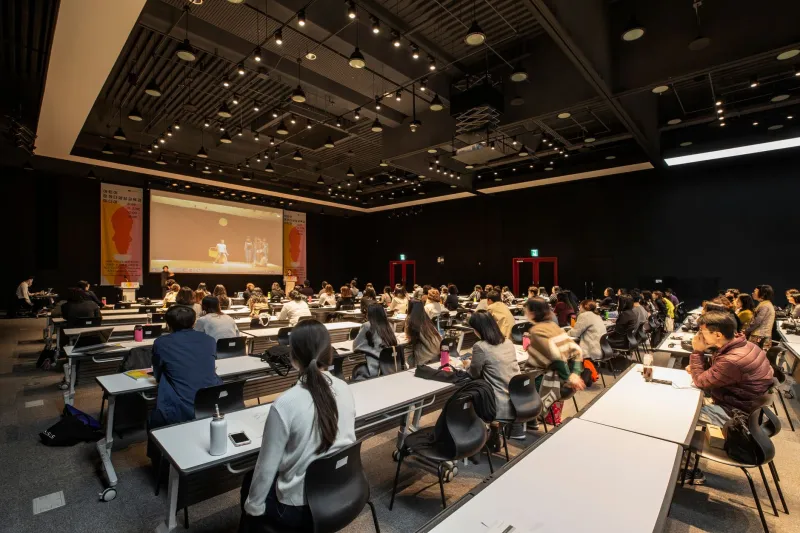
Photo by Photo by Campaign Creators on Unsplash on Unsplash
The Counterintuitive Move That's Reshaping Industry Events
For decades, the logic was straightforward: if your organization wanted to signal its standing in a given industry, you showed up at the largest trade show in your sector. You secured the prime booth, brought your best people, and let the foot traffic validate your market position. Presence at the marquee event was, in effect, a form of institutional credibility.
That logic is eroding.
Across sectors — from enterprise technology and healthcare to manufacturing and financial services — a notable pattern has emerged. Organizations that once anchored their event strategy around participation in established mega-shows are now redirecting significant portions of their event budgets toward smaller, purpose-built gatherings that they own outright. These are not satellite events designed to complement a larger conference. They are deliberate alternatives to it.
Understanding why this is happening, and what it means for venues and event professionals, requires a closer look at the economics, the branding calculus, and the evolving definition of influence in professional communities.
The Economics of Participation vs. Ownership
Exhibiting at a major industry trade show carries costs that extend well beyond the booth rental fee. When organizations conduct a full accounting — factoring in floor space, booth construction and logistics, staffing, travel, hotel accommodations, sponsorship tiers, and the ancillary events that surround any major convention — the total expenditure for a mid-to-large exhibitor can easily reach six figures for a single event. For organizations at the top of their sector, costs can climb considerably higher.
Against that backdrop, the financial case for hosting a private conference begins to look surprisingly competitive. A well-produced gathering of 200 to 500 carefully selected attendees, held at a professional venue for two days, can be executed at a comparable or lower total cost — while delivering a fundamentally different category of return.
The distinction is one of control. At a mega-show, an organization is one of hundreds or thousands of exhibitors competing for the same attendee attention. At a self-hosted event, that organization is the center of gravity. Every session, every networking opportunity, every moment of the agenda reflects its priorities and amplifies its positioning.
Audience Curation as a Competitive Advantage
One of the most frequently cited reasons industry leaders give for stepping back from large-scale conventions is the challenge of audience quality at scale. Mega-shows, by design, attract broad participation. That breadth is part of their value proposition — and it is also their limitation.
For organizations that have identified a specific tier of prospect, partner, or peer they most need to engage, the open-floor model of a traditional trade show can feel inefficient. Time spent navigating a crowded expo floor is time not spent in substantive conversation with the ten or twenty individuals who represent the most meaningful relationships for that organization's strategic objectives.
The boutique conference model addresses this directly. Invitation-only or application-based attendance structures allow hosts to shape the room with precision. Every seat at the table represents a deliberate choice. The result is a density of relevant conversation that is structurally difficult to replicate in a general-admission environment.
This is not elitism for its own sake. It is a recognition that the value of a professional event is determined less by the number of attendees than by the alignment between those attendees and the host's specific goals.
Branding Authority Through Event Ownership
There is a subtler dynamic at work as well, one that touches on how organizations establish and maintain thought leadership within their industries.
Sponsoring a session at a major conference, or hosting a side event in a hotel ballroom adjacent to the main convention, positions an organization as a contributor to someone else's platform. Hosting your own conference — one that bears your name, reflects your editorial perspective, and draws attendees specifically because of your organization's reputation — is a categorically different statement.
Some of the most recognized gatherings in American business did not begin as large-scale productions. They began as focused, credibility-driven events hosted by organizations confident enough in their own authority to build a stage rather than rent space on someone else's. Over time, many of these gatherings have become the events that define their sectors.
For organizations with genuine expertise and a compelling point of view, the boutique conference is increasingly viewed not as a retreat from the mainstream event circuit, but as an investment in long-term brand equity.
What This Means for Traditional Convention Venues
The fragmentation of the event landscape presents both a challenge and an opportunity for established convention venues. The challenge is real: if major industry players are redirecting budget toward self-produced events, the demand profile for large-scale expo floors may shift in ways that require structural adaptation.
But the opportunity is equally significant. Organizations moving toward the boutique model still need professional infrastructure. They need flexible floor plans that can accommodate both plenary sessions and intimate breakout formats. They need audiovisual capabilities that meet the expectations of sophisticated professional audiences. They need catering, logistics support, and the kind of operational reliability that allows a host organization to focus entirely on content and relationship-building rather than venue management.
In other words, the shift toward smaller, self-produced conferences does not eliminate the need for high-quality event venues. It changes the type of client seeking those venues, and it raises the bar for what those venues must deliver.
Venues that position themselves as genuine partners in event production — rather than simply as spaces available for rental — are well-positioned to capture this emerging segment. The ability to offer customizable configurations, responsive service teams, and a track record of supporting events where the host organization's reputation is on the line will become an increasingly important differentiator.
The Enduring Case for Shared Industry Platforms
It would be a mistake to interpret this trend as a wholesale rejection of the traditional trade show model. Large-scale industry events continue to serve functions that no single organization can replicate on its own: broad market visibility, access to emerging players, and the kind of serendipitous discovery that comes from genuine open-floor interaction.
What is changing is the role these events play within a more diversified event strategy. For many organizations, the mega-show is no longer the centerpiece of their annual presence — it is one element among several, each designed to accomplish a distinct objective.
The most sophisticated organizations are not choosing between large events and small ones. They are building portfolios of event participation and event ownership, calibrated to serve different strategic purposes at different moments in the business cycle.
For venues, for event professionals, and for industry associations that steward the major shows, understanding this shift is not optional. The organizations that adapt their value proposition to meet this more nuanced demand will find an audience ready to engage. Those that assume the old model will hold indefinitely may find themselves watching from the margins of a landscape that has quietly moved on.