Reading the Room in Real Time: How Forward-Thinking Venues Anticipate What Attendees Need Before They Ask
There is a particular kind of expertise that rarely appears on a venue's marketing brochure. It does not involve square footage, catering menus, or audiovisual specifications. It is the ability to read a crowd—to observe how people move, where they pause, what they avoid, and what draws them in—and then act on those observations before a single attendee thinks to file a complaint or submit feedback.
This capability is becoming one of the most consequential differentiators in the convention and trade show industry. As event planners grow more sophisticated in their expectations, the venues that thrive will be those that treat the live event not as a static environment to be maintained, but as a dynamic system to be continuously interpreted and adjusted.
The Difference Between Reactive and Anticipatory Venue Management
Most event venues operate on a reactive model. Staff respond to complaints. Facilities teams address problems once they become visible. Post-event surveys capture dissatisfaction that could have been resolved hours earlier. This approach is not negligent—it reflects the traditional logic of hospitality management, where the guest experience is largely shaped before the doors open.
Anticipatory venue management operates on an entirely different premise. It assumes that attendee behavior generates continuous, readable signals throughout an event—signals that, when properly interpreted, allow staff to intervene proactively. A cluster of attendees lingering in a hallway may indicate that an adjacent session ran long and the next room is not yet accessible. A sudden surge toward a registration desk may suggest that directional signage broke down somewhere along the path. A conspicuous absence of foot traffic in a designated networking area may mean the space feels too formal for the informal conversations it was designed to host.
Venues that recognize and respond to these signals in real time create a measurably different experience than those that simply wait for the next scheduled check-in.
Behavioral Observation as a Professional Discipline
Long before the era of smart sensors and analytics dashboards, experienced event managers developed an intuitive fluency for reading crowds. They learned to position themselves at the intersection of traffic flows rather than at the perimeter. They noticed when the energy in a room shifted—when conversation grew louder, or when a space that should have been bustling fell inexplicably quiet.
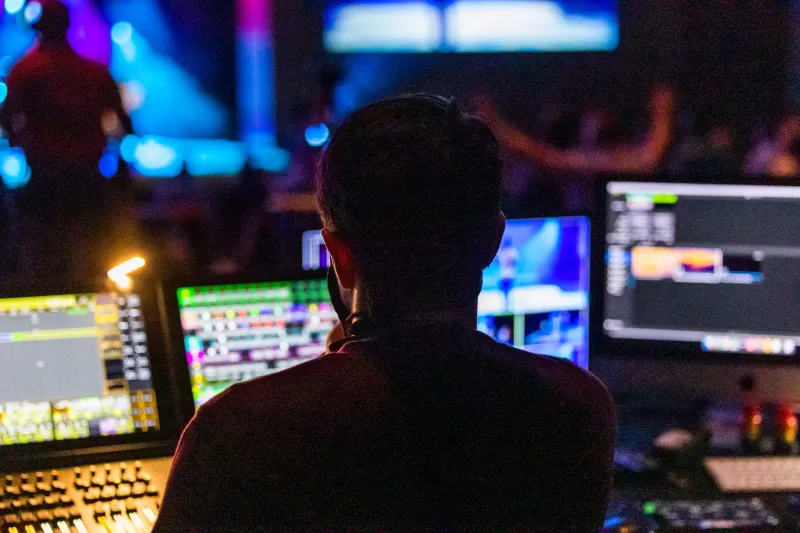
This observational discipline remains foundational. Technology amplifies it; it does not replace it. The most effective venue operations teams combine trained human observation with data-driven tools to build a real-time picture of how an event is actually unfolding versus how it was planned to unfold.
For event planners, this means that the question to ask a prospective venue is not simply "how many staff will be on-site?" but rather "how are your staff trained to observe and respond to attendee behavior during a live event?" The answer reveals a great deal about the venue's operational philosophy.
What Real-Time Data Actually Looks Like on a Convention Floor
Modern convention centers and expo facilities have access to a growing suite of tools that translate crowd behavior into actionable information. Foot traffic sensors embedded in flooring or mounted overhead can track density and movement patterns across different zones. Badge-scanning data at session entrances provides attendance figures that update in minutes rather than days. Wi-Fi access point analytics can identify where attendees are congregating based on device connections, offering a low-friction proxy for physical presence.
At a practical level, this data allows venue operations teams to make mid-event adjustments that would have been impossible a decade ago. If sensor data reveals that a particular corridor is approaching uncomfortable density, staff can be redirected to open an alternative route before a bottleneck forms. If attendance in a breakout session significantly exceeds projections, arrangements can be made to move the next session to a larger room during the break rather than after the fact.
These are not dramatic interventions. They are small, precise adjustments that collectively determine whether an event feels effortless or exhausting to the people moving through it.
The Reconfiguration Question: Flexibility as a Strategic Asset
Anticipatory venue management is only as effective as the physical flexibility that supports it. A venue can identify a need with perfect accuracy and still be unable to respond if its infrastructure does not permit rapid reconfiguration.
This is why the most operationally sophisticated venues invest heavily in modular furniture, movable partition systems, and staff deployment models that allow spaces to be repurposed quickly. An informal networking area that is underperforming mid-morning may need to be repositioned—literally—to capture the foot traffic that migrates toward the refreshment stations after the first major keynote. A registration queue that extends beyond its designated zone may need temporary stanchion adjustments and an additional staff member within minutes, not hours.
Event planners who are evaluating venues should ask directly about reconfiguration capabilities and response times. Specifically: what is the venue's process for making mid-event layout changes, and who has the authority to authorize them without escalating through multiple approval layers? The answer tells you whether the venue is built for responsiveness or for compliance.
Partnering With a Venue That Treats Your Event as a Living System
For planners, the practical implication of all of this is straightforward: the relationship with your venue should not end at the close of the pre-event walkthrough. The most productive venue partnerships involve ongoing communication during the event itself—a designated point of contact who is actively monitoring conditions and empowered to act, not simply available to receive complaints.
Before signing a venue contract, it is worth establishing a shared protocol for real-time communication. Who receives operational updates during the event? How are mid-event adjustments communicated to the planning team? What threshold of observed friction triggers a proactive response from venue staff?
These conversations are not routine. Many planners never have them. But the venues that are equipped to answer them confidently are the venues that treat attendee experience as a continuous responsibility rather than a pre-event checklist.
What Attendees Remember—and What They Don't
There is a final consideration that underscores why all of this matters. Attendees rarely remember the specific problems that were solved before they noticed them. What they remember is the feeling of an event that ran smoothly, that felt considered, that seemed to anticipate their needs rather than scramble to address them.
That feeling is not accidental. It is the product of deliberate operational intelligence—of venues and planners who understand that the most meaningful service is the kind that goes unnoticed because it was delivered before it was needed.
In the competitive landscape of trade shows, conferences, and industry exhibitions, that kind of invisible excellence is increasingly the standard by which the best events are measured. The venues that have mastered it are worth finding—and the planners who know how to identify them are worth becoming.