Behind Every Great Trade Show Is a Loading Dock Nobody Photographs

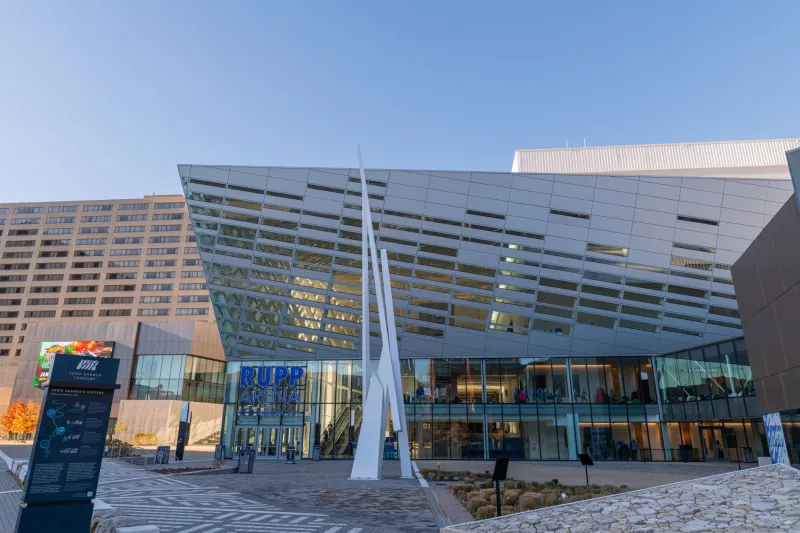
Photo: Xnatedawgx, CC BY-SA 4.0, via Wikimedia Commons
Ask an exhibitor why they rebooked at a venue and they will talk about foot traffic, lead quality, or the city itself. Ask them privately, over coffee, why they ruled a venue out, and the answer is more often mundane: the freight elevator was the size of a closet, or load-in backed up for three hours on a single dock.
The logistics layer of a convention facility is the least photographed, least marketed square footage on the property — and increasingly, the most consequential.
The Rebooking Decision Happens During Move-In
Experienced exhibit managers form their judgment of a venue in the first four hours of setup, long before doors open. That is when the truth about a facility's operational capacity reveals itself.
A venue with a single shared dock forces exhibitors to compete for a finite resource. Crews sit in trucks burning hourly labor rates while waiting their turn. Union jurisdictions, where applicable, add scheduling complexity that a well-run dock staff can absorb — and a poorly run one turns into a bottleneck.
By contrast, facilities with multiple dock bays, drive-in access for oversized freight, and marshaling yards can compress move-in from a full day into a morning. Exhibitors notice. More importantly, they tell their trade show committees, and those committees control next year's budget.
What Actually Gets Judged
The audit list in a seasoned exhibitor's head is short and specific:
- Dock count and door dimensions. Can a standard semi back in without a shunt? Are there ground-level doors for vehicles that need to stay accessible during show hours?
- Freight elevator capacity. Weight limits and door clearances determine whether a 600-pound kiosk crate needs four people or a forklift.
- Load-in windows. Does the venue stagger arrivals by zone, or does everyone arrive at once and discover the answer is no?
- On-site storage. Empty crates that can be stored under the hall mean exhibitors can restock and repack without a second freight run.
- Distance from dock to booth. Every additional corridor, ramp, or carpet transition adds time, labor cost, and damage risk.
None of this appears in a venue's brochure. All of it appears in an exhibitor's cost-per-lead calculation.
The Quiet Economics of Move-In
Consider the arithmetic. A mid-size trade show might carry 300 exhibitors. If logistical friction adds three hours of idle crew time per booth at an average of $85 per hour for a two-person setup crew, the aggregate waste approaches $150,000 — spread across exhibitors who experience it as pure friction, attributed entirely to the event and its venue.
Organizers who ignore this are effectively taxing their exhibitors invisibly. Organizers who choose venues with genuine operational depth are subsidizing their exhibitors' ROI without spending a dollar of their own.
What Planners Should Audit Before Signing
Planners evaluating a venue contract should walk the back-of-house personally, not rely on the sales presentation. Request the load-in schedule from a comparable past event and ask to see it executed, or at minimum, see the floor it was executed on.
Three questions cut through sales language quickly:
- How many dock bays can operate simultaneously, and who coordinates the marshaling yard?
- What is the venue's standard move-in window for a show of this size — and what happened the last time a show exceeded it?
- Where does empty crate storage sit relative to the exhibit floor, and is it included or billed per pallet?
Hesitant answers to any of the three are not disqualifying on their own. But they tell you where the friction will surface, and whether the venue's operations team treats logistics as a discipline or an afterthought.
The Unphotographed Advantage
There is a reason the industry's most reliable venues rarely lead with their dock specifications in marketing. The audiences who care — exhibit managers, general service contractors, show organizers on their fourth venue in six years — already know to ask. For everyone else, the numbers speak during move-in, when a well-designed facility turns a chaotic morning into a routine one.
The glamour of a trade show lives on the show floor. Its fate is usually decided behind the roll-up doors.