Designing for Discovery: How Smart Venues Turn Chance Encounters into Strategic Partnerships
Photo: Danielle G. Campbell, CC BY-SA 4.0, via Wikimedia Commons
Ask any seasoned conference attendee where the most important conversation of their career took place, and the answer is rarely the keynote hall. More often, it was a hallway outside a breakout session, a corner of a coffee station between presentations, or a casual exchange in a registration queue that turned into a two-hour working lunch. These moments are not accidents. At least, they should not be.
The most effective event planners understand something that is rarely articulated in a conference brochure: the physical environment of a gathering is not a neutral backdrop. It is an active participant in the outcomes the event is designed to produce. And the venues that understand this philosophy — architecturally, operationally, and philosophically — are the ones where those defining conversations actually happen.
The Architecture of Serendipity
Serendipity, in the context of professional events, is not random. It is engineered.
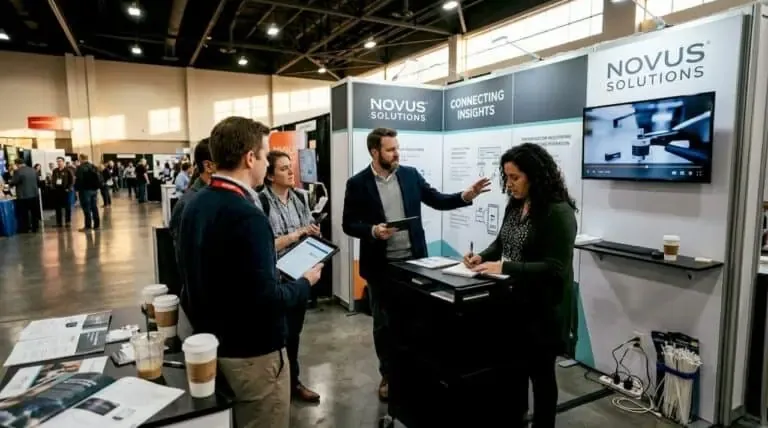
When an event planner chooses where to position the coffee service, how wide to make the corridor between session rooms, or whether to place high-top tables in the transition space between the exhibit floor and the breakout wing, each of those decisions carries a social consequence. Dense, narrow pathways push people through spaces quickly and without pause. Open, furnished transition zones invite people to stop, look up from their phones, and engage with whoever happens to be nearby.
This is not intuition — it is a discipline with a growing body of research behind it. Studies in environmental psychology and organizational behavior consistently demonstrate that the physical configuration of shared spaces directly influences the frequency and quality of spontaneous interactions. In a professional event context, those interactions are the product.
"People don't come to conferences for the PowerPoints," notes one veteran event director who has produced major industry gatherings across the United States for more than fifteen years. "They come because they want to be in the room with the right people. Our job is to make sure those people find each other."
What Intentional Layout Actually Looks Like
The difference between a venue that facilitates connection and one that simply houses an event is observable in specific, concrete design choices.
Consider the placement of registration. At many convention centers, registration is treated as a logistical necessity — a table near the entrance, processed as quickly as possible, with attendees dispersed immediately into the program. At venues designed with connection in mind, the registration experience is extended and enriched. A comfortable pre-session lounge adjacent to check-in gives early arrivals a reason to linger, creating a natural gathering zone before the formal program begins. That thirty-minute window before the opening session is prime networking real estate, and most events waste it.
Breakout session rooms present another opportunity. The instinct is to fill every available square foot with seating, maximizing capacity. But experienced planners increasingly advocate for sessions set at seventy to eighty percent of room capacity, with the remaining space configured for post-session conversation clusters. When a session ends and the speaker steps down from the podium, attendees who want to continue the discussion have a physical space that supports it rather than forcing them immediately into a crowded corridor.
Furniture configuration matters as well. Long rows of chairs facing a single direction minimize peer interaction and reinforce a passive, audience-to-presenter dynamic. Modular seating arrangements that allow small groups to form naturally — clusters of four to six, with sight lines that encourage cross-group awareness — activate a fundamentally different social dynamic.
The Venue as a Strategic Partner
None of these design principles can be fully realized in a venue that was not built to accommodate them.
Event planners working with inflexible floor plans, fixed seating configurations, or inadequate transition spaces between program areas are working against the physics of human connection. The layout becomes a constraint rather than a tool. Workarounds are possible, but they carry cost — both financial and experiential.
Facilities like Angelina Expo Center approach spatial design as a core competency rather than an incidental feature. Flexible floor configurations, adaptable breakout spaces, and deliberate attention to the informal zones between formal programming areas allow event planners to implement connection-oriented design without fighting the building.
"The venue has to be a collaborator," says one conference producer who specializes in professional association events. "When I can tell the venue what I'm trying to achieve socially — not just logistically — and they can translate that into a floor plan, that's when the event starts to work at a different level."
Designing the Informal Program
Perhaps the most underappreciated element of connection-oriented event design is what might be called the informal program: the structured unstructured time that gives attendees permission and context to engage with one another outside of sessions.
Networking receptions are the most common version of this, but they are also among the most poorly designed. A large open room with a cash bar and ambient noise is not a networking environment — it is a social endurance test for introverts and a missed opportunity for everyone else. Effective informal programming uses smaller, interest-specific formats: roundtable dinners organized by professional discipline, problem-solving workshops with mixed-industry attendee lists, or facilitated introductions that give people a conversational entry point beyond "So, what do you do?"
The venue's role in supporting these formats is significant. Access to a variety of room sizes, outdoor spaces, and configurable furniture gives planners the flexibility to design informal programming that fits the specific social dynamics of their attendee community.
Why This Philosophy Matters for Every Stakeholder
The business case for connection-oriented event design is not abstract. Exhibitors at trade shows where attendee flow is thoughtfully managed report higher quality booth interactions, because attendees arrive with time and mental space to engage rather than rushing between appointments. Speakers at conferences with well-designed breakout environments report more substantive audience questions and longer post-session discussions. Sponsors whose brand presence is integrated into informal gathering zones report stronger recall and more meaningful engagement than those confined to signage in high-traffic corridors.
For the organizations that host these events, the downstream effect is equally concrete. Attendees who leave a conference with genuine new relationships — not just business cards — are the ones who register again next year, who recommend the event to colleagues, and who become the community that sustains an annual gathering over decades.
That outcome does not happen by chance. It happens because someone — an event planner, a venue partner, or both — understood that the physical space of a conference is not just where the event takes place. It is how the event works.