Interrogate the Building: Five Questions That Expose a Venue's Real Capabilities
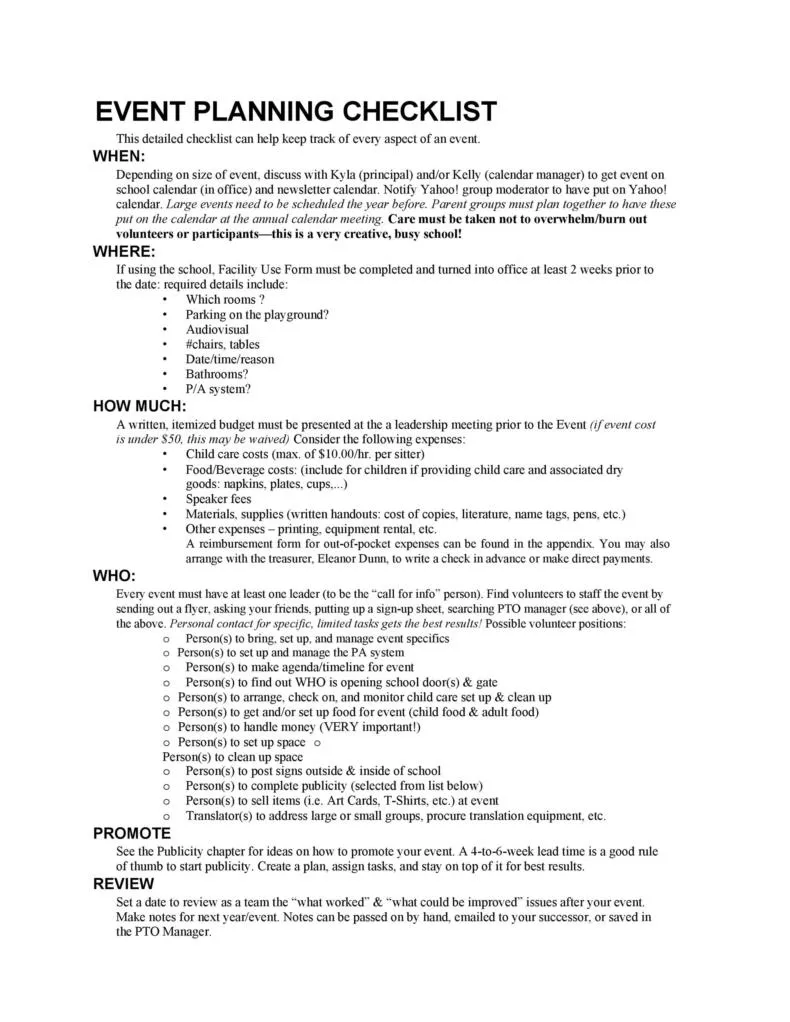
Photo: event planner site visit walkthrough convention facility checklist, via templatelab.com
Every venue performs well during a site visit. The sales team has rehearsed the tour, the lighting is set to flattering, and the executive chef has prepared the exact menu that closes deals. A site visit, left unstructured, is a sales presentation with walking.
The planner's job is to convert it into an audit. That requires questions the venue cannot rehearse — ones that force operational specifics rather than hospitality language. Here are five, with guidance on what a weak answer sounds like and when to walk.
1. "Walk me through your WiFi failover. Not the primary network — the failure scenario."
Why it matters: Connectivity failures at events are rarely about bandwidth. They are about what happens when the primary access point fails, when 2,000 attendees join simultaneously, or when a contractor's hotspot saturates a segment.
A strong answer names redundant backbones, separate SSIDs for production versus attendees, and a named on-site technician during event hours. A weak answer is anything containing the word "usually" — "we usually don't have problems." Red flag: if the venue cannot tell you who is physically on-site to fix a failure at 9 a.m. on a Tuesday, assume no one is.
2. "What is your staff-to-event ratio, and which of those people are W-2 employees versus contractors?"
Why it matters: The people who greet your attendees are often temporary labor hired the week before. That is workable — unless nobody told you.
A strong answer includes specific headcounts per shift, a named event manager who attends your planning calls, and clarity on which roles are house staff versus agency fill. A weak answer pivots to "we scale to your needs" without numbers. Red flag: no single point of contact with authority to make decisions mid-event.
3. "Show me the last three emergency evacuations or weather closures. What happened?"
Why it matters: When a storm closes the interstate, your attendees are the venue's problem for an extra night. The response playbook — shelter capacity, food service contracts, communication systems — either exists on paper or it does not.
A strong answer references a specific incident, the actions taken, and a documented plan. A weak answer is generic reassurance: "we follow our emergency procedures." Red flag: no written plan, or a plan that has never been drilled with the current staff.
4. "What does the ceiling grid actually allow me to rig, and what does it cost?"
Why it matters: Rigging is where venue budgets hide their surprises. A beautiful ballroom with a 14-foot ceiling cannot hang a single truss, and rigging charges of $75 per point can add five figures to a production budget.
A strong answer comes with a rigging grid document, load ratings, and a published rate card. A weak answer defers to "your production company will handle that." Red flag: refusal to share rate cards before contract signing. If pricing is a surprise after you sign, it was designed to be.
5. "Tell me about an event here that went wrong. What changed afterward?"
Why it matters: This question tests culture more than capability. Venues that cannot recall a failure are either lying or not paying attention.
A strong answer is specific and slightly uncomfortable — a flooded loading area, a double-booked ballroom — paired with the procedural change that followed. A weak answer is "we have a very experienced team." Red flag: defensiveness. An operations team that treats mistakes as learning material will treat your event the same way.
The Pattern Beneath the Questions
Notice what all five have in common: each asks for specifics, documentation, or a story about failure. Sales teams can improvise around general questions. They cannot improvise around a request for a rigging grid.
Planners who bring this list to a site visit report the same thing afterward: the tour becomes shorter, the conversation becomes more honest, and the gap between polished venues and capable ones becomes obvious. The building that answers all five comfortably is the one worth negotiating with.